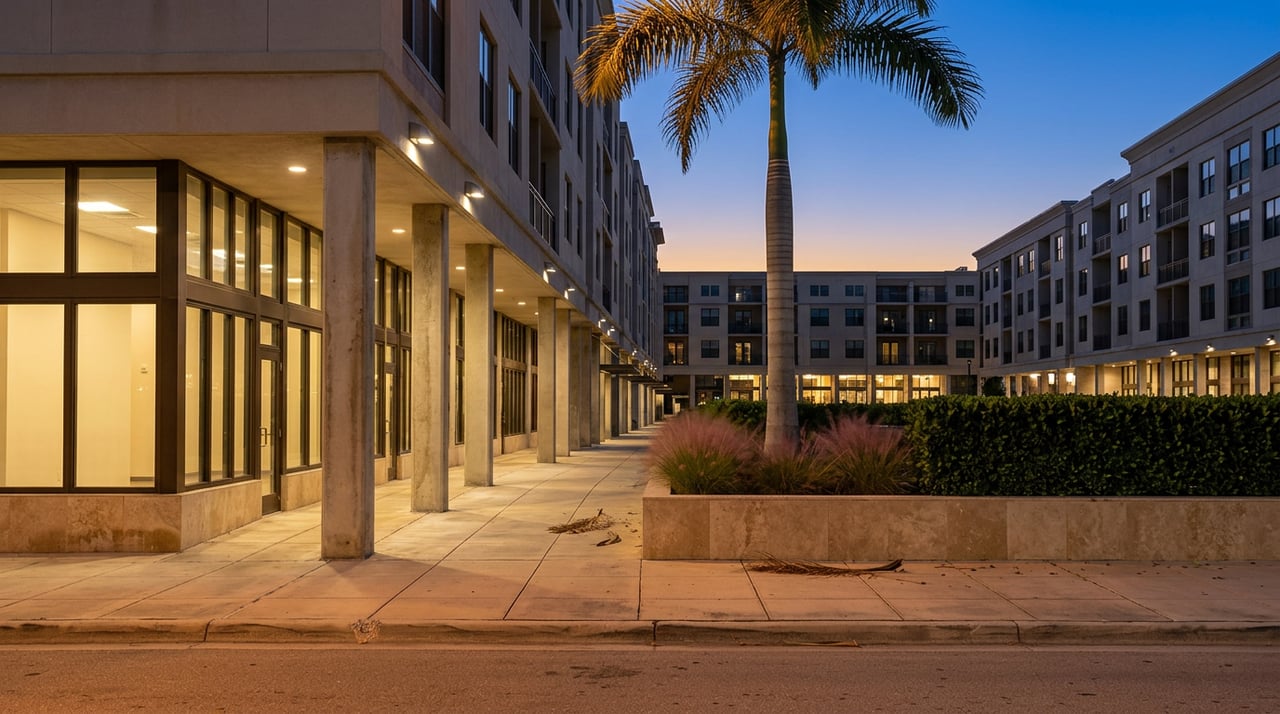
Walk along Channelside Drive on the right October evening and you will notice the crowd before you notice the building. Streetcar bells, a line forming outside Ford Thunder Alley, the patio at Sparkman Wharf filling in early because everyone already knows where this night is headed. Somewhere in that walk, most residents will glance up at the arena and register, without much thought, that it says Benchmark International Arena above the doors. That stopped being a surprise a while ago. What is actually new this fall is not the name on the building. It is the calendar inside it.
The Tampa Bay Lightning open their home schedule on October 3 against the Washington Capitals, the first of a three-game homestand. That date matters less on its own than what follows it. This season's 84-game format, the first time the Lightning have played that many regular season games since the 1993-94 season, packs its home dates unevenly across the fall and winter. For anyone living within a few blocks of Water Street, that unevenness is the real story, because it determines which weeks feel like a normal Tuesday and which weeks feel like Water Street has been taken over.
The Name Stopped Being the Story a Year Ago
It is worth being precise about the timeline here, because the arena's identity has genuinely shifted more than once. The building opened in 1996 as the Ice Palace. It became the St. Pete Times Forum in 2002, then the Tampa Bay Times Forum in 2012, then Amalie Arena in September 2014. On August 13, 2025, Vinik Sports Group and the Tampa-based mergers and acquisitions firm Benchmark International announced a multi-year naming rights partnership, and the building has carried the Benchmark International Arena name since. The deal came with new exterior and interior signage, a rebranded premium level called the Benchmark International Club Level, and a signature experience inside it called The Mark, all of which rolled out ahead of the 2025-26 season.
That means this is the arena's second full season under its current name, not its first. The novelty already happened. If you moved to Downtown in the past year, you have only ever known this building by this name. If you have lived here longer, the adjustment is behind you. Either way, the name itself has nothing left to tell you about what this fall will feel like on your street.
An 84-Game Season Changes the Math
The schedule does. The Lightning will play 42 home games and 42 road games this season, two more of each than the standard 82-game format that has defined the NHL calendar for decades. Those extra dates come from playing every Atlantic Division opponent four times instead of the usual mix, twice at home and twice on the road. The practical effect for Downtown residents is that home dates cluster into stretches rather than spreading out evenly.
Two stretches matter most. The first runs November 14 through November 27, a six-game homestand that includes the Carolina Hurricanes' only visit to Tampa this season, on November 25. November as a whole is the Lightning's busiest home month, with more games played at Benchmark International Arena than in any other month of the season. The second homestand runs February 12 through February 23, well past the fall window most residents are planning around right now, but worth knowing about if you are the type to keep a calendar. December, by contrast, is the busiest month overall once road games are counted, with 15 total games and only seven of them at home. That is a month where the team is often away and the neighborhood quiets down between home dates rather than staying loud straight through.
Here is how the fall stretch actually breaks down:
| Window | What's Happening | Why It Matters Locally |
|---|---|---|
| October 3 | Home opener vs. Washington Capitals | First of a three-game homestand to open the season |
| November 14 to 27 | Six-game homestand | Includes Carolina's only Tampa visit, November 25 |
| November (full month) | Most home games of any month | Eight games at Benchmark International Arena |
| December | Busiest month overall | 15 total games, only 7 at home |
| February 12 to 23 | Second six-game homestand | Falls outside the fall window, useful for winter planning |
The two home dates against the Florida Panthers, the team's actual in-state rival, do not happen until February 16 and March 23, both in 2027 and both outside anything this piece is calling fall.
What a Homestand Actually Feels Like on the Street
A single home game changes a few blocks for an evening. A six-game homestand changes the neighborhood's rhythm for two weeks. During the November 14 to 27 stretch, expect the TECO Line Streetcar to run fuller than usual on its free route between Downtown and Ybor City, since it remains the easiest way to avoid arena-adjacent parking on a game night. Expect Ford Thunder Alley, the plaza just outside the building, to be the pregame gathering point it has become during recent Lightning postseason runs, when the team has used the space for open-air viewing at low ticket prices. And expect Sparkman Wharf, a few blocks over on Garrison Channel, to do what it already does on game nights: put the broadcast up on its large outdoor screen and let the biergarten crowd double as an overflow watch party for people without tickets.
None of this is new behavior for Downtown. What changes during a homestand is the density of it. Six home games compressed into a two-week window means six evenings where that pattern repeats back to back, rather than one game breaking up an otherwise quiet week.
Where the Regulars Actually Go
The bars that fill up on game nights are not a mystery to anyone who has lived here a while, but they are worth naming plainly for anyone newer to the neighborhood. Hattricks, on Franklin Street, has spent close to three decades as Downtown's tried and true Lightning bar, long enough to have become a fixture rather than a trend. The Hub, a two-television dive bar that has hosted a Stanley Cup visit courtesy of head coach Jon Cooper, draws a crowd that treats a home game as a good enough reason on its own. Yeoman's, a British pub near Channelside, added a Topgolf Swing Suite alongside its usual pregame and postgame traffic, giving groups something to do between periods without leaving the building.
None of these spots require insider knowledge to find. What is useful is knowing when to expect them full. A homestand week means all three are busier every night rather than just once. A road-heavy stretch like December means you can walk in on a Tuesday and get a table.
The Practical Takeaway
The building's name is settled. What is not settled, and what actually shifts week to week for anyone living near Water Street, is the schedule sitting behind that name. The fall opens with a single homestand in early October, quiets briefly, then compresses into six straight home dates in mid to late November before easing into a road-heavy December. Knowing that rhythm, rather than just knowing the arena's current name, is what actually tells you when your block gets loud and when it does not.
If you are weighing what it is really like to live within walking distance of Water Street, from the seasonal rhythms to the neighborhood's day to day feel, the team at Gasparilla Gulf Estates spends its time in these blocks and is glad to talk through what a given stretch of Downtown actually feels like to live in, this fall and beyond. Contact us anytime.